
If you are stuck in Orlando traffic or waiting in a long line at a theme park, you definitely know the feeling of hurry up and wait. However, at Orlando International Airport (MCO), the security checkpoint is probably the only place where that feeling may literally result in a missed flight.
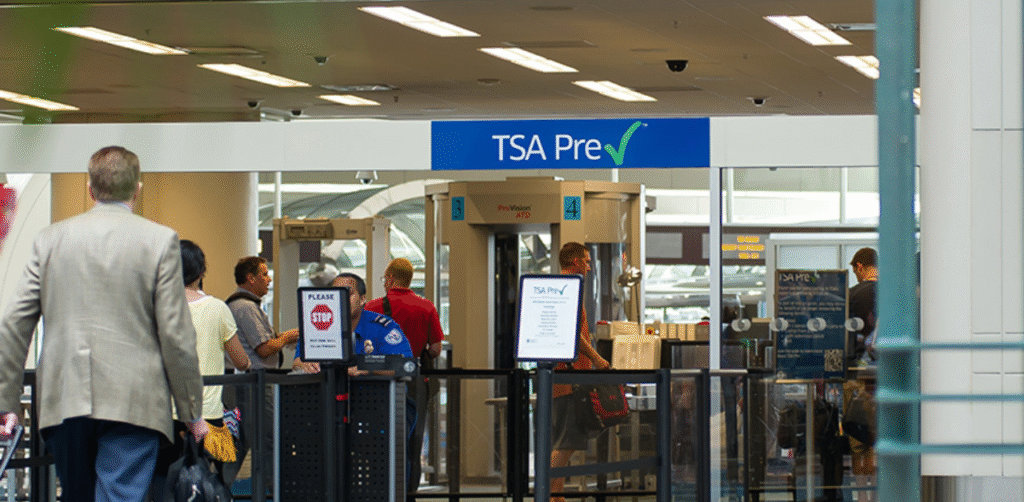
Every year, millions of families and travelers pass through MCO. During the holiday rush or Spring Break, simply monitoring MCO Security Wait Times isn’t a tip anymore; it’s a survival strategy. Getting to know if you are going to a 5-minute breeze or a 45-minute trek will let you decide if you have time for that last Cuban coffee or if you need to go straight to the gate.
Understanding Security Screening at Orlando International Airport (MCO)
Traveling through a busy airport in Florida can be both thrilling and stressful at the same time. There are millions of visitors each year at Orlando International Airport (MCO) and it is a good idea know the TSA security process at MCO, the location of the screening checkpoints, and the differences between domestic and international departures before starting your trip.
Overview of TSA Security Process at MCO
Orlando International Airport (MCO) works hand in hand with the TSA to make sure all flights are safe, but being honest, the last thing you want on the way back home from your vacation is to look at a long security line.
Here is a quick look at what to expect and how to breeze through:
- The Checkpoint Flow: After checking in with your airline, you will proceed to the security checkpoints. Before you get to the X-ray conveyor belts, a TSA officer will check your ID and boarding pass.
- The Standard Routine: If you are in a regular lane, you will be required to put your carry-on bags, jacket, belt, and shoes directly on the belt.
- Electronics & Liquids: Any items larger than a cell phone (such as tablets or laptops) must be removed from your bag and placed in a separate bin. Remember the 3-1-1 rule for liquids; keep them in a clear, quart-sized bag and pull that out, too.
- Advanced Imaging: You’ll step through a body scanner that uses imaging technology to check for any hidden items. It’s quick and designed to be as non-invasive as possible.
- MCO Reserve (Pro Tip): People without TSA PreCheck or CLEAR might be interested to know that MCO offers a great free product called MCO Reserve. You may reserve a particular time slot up to 7 days ahead to use a separate, short line, perfectly timed to avoid the biggest crowds.
- “Families on the Fly”: Are you traveling with kids? MCO has family lanes that are exclusively for families with children 12 years and under to make the experience a bit less stressful.
What IDs Are Accepted at TSA Security Checkpoints
Before heading to the airport, apart from packing your bags, checking your identification is equally important. The Transportation Security Administration (TSA) has set requirements for acceptable IDs at security checkpoints, and these requirements have become even more significant with the implementation of REAL ID and digital identification options.
State-Issued REAL ID–Compliant Driver’s Licenses or ID Cards
- TSA recognizes state-issued driver’s licenses or identification cards that are REAL ID-compliant. Such IDs usually have a star or another particular symbol to indicate that they are compliant.
- In case you don’t know if your license or ID complies with the REAL ID standards, the smartest thing to do is to contact your state Department of Motor Vehicles (DMV) or the corresponding authority.
- A temporary driver’s license can’t be used as a valid identification at TSA checkpoints.
- TSA also allows the use of state-issued Enhanced Driver’s Licenses (EDL) and Enhanced Identification Cards (EID). These forms of identification comply with federal security standards and may be utilized for airport screening purposes.
- Travelers can use either a U.S. passport or a U.S. passport card for identity verification at TSA security checkpoints since both are generally accepted and considered good alternatives for those who do not have a REAL ID–compliant driver’s license or identification card.
- TSA accepts as valid identification at security checkpoints trusted traveler cards issued by the U.S. Department of Homeland Security, including Global Entry, NEXUS, SENTRI, and FAST, thus allowing eligible travelers to use these credentials as valid identification.
Mobile Driver’s Licenses (mDLs)
TSA accepts certain Mobile Driver’s Licenses (mDLs) as part of its approved digital ID program.
Key points to know:
- The mDL must be based on a REAL ID, EDL, or EID
- Only states approved for federal use are eligible.
- The list of approved states is maintained by the TSA under its participating digital ID program.
No REAL ID or Acceptable Identification?
After February 1, 2026, passengers who cannot present a valid form of identification for a TSA checkpoint may resort to TSA ConfirmID by prepaying a charge of $45. TSA will try to verify the passenger’s identity using this method, allowing them to continue with the airport security screening.
Identification Rules for Children
Kids under 18 years and younger are not required to show any ID while traveling within the United States; however, unaccompanied minors who meet the TSA PreCheck criteria have to show an acceptable form of ID. As each airline may have its own id policy for young travelers, it is advisable to check requirements via the airline before booking a flight.
Main Security Checkpoints Across Terminals
These timings are an actual real-time snapshot, and they can change drastically depending on the flight times and the busiest hours for traveling.
| Gate Range | Checkpoint Location | General Screening | TSA PreCheck® |
| Gates 1 – 59 | Terminals A & B (West) | 14 – 17 min | 0 – 4 min |
| Gates 70 – 129 | Terminals A & B (East) | 10 – 13 min | 3 – 7 min |
| Gates C230 – C249 | Terminal C | 5 – 9 min | 2 – 5 min |
Each security checkpoint is situated beyond the airline check-in counters, but before you get to your gate. The airport website presents security wait times in real time, updated throughout the day, so you can plan your arrival time accordingly.
Domestic vs International Screening Differences
At MCO, screening officers implement TSA rules in the same way for both domestic and international departures. The major distinction in international travel is the need for departure documents and passports rather than the actual security procedures. After passing security, international travelers head to their boarding gate and may be subjected to further checks when they arrive.
Average Security Wait Times at MCO
Security wait times at MCO are quite different depending on the day, the time, and the number of travelers. Although the airport does not provide guaranteed wait times, it provides real-time checkpoint updates via the official MCO app and website.
Typical Wait Times During Off-Peak Hours
During quiet times at the airport, like late morning or evening, the security lines at MCO usually go quite fast. Besides that, since the airport shares updates on its official platforms, you can check the estimated wait time before even getting to the security line.
- Average Delays During Regular Travel Days: On normal travel days, people don’t usually face long wait times. Visitors should always allow enough time for screening when departing during a peak hour, when several flights depart within the same hour.
- What Travelers Experience at Different Times of Day: TSA wait times may be reduced right after security opens early in the morning and at night when there are fewer flights, while during the day and late afternoon, there are usually more travelers. The official MCO website is the most reliable source for live checkpoint wait times as your travel day gets closer.
Factors That Affect Orlando International Airport (MCO) Security Wait Times
Several elements influence how long security lines can take:
- Passenger volume and flight schedules, most crowded when several flights depart and arrive simultaneously.
- Weather disruptions, such as bad weather, often result in flight delays and passenger overcrowding.
- Staffing levels and special TSA procedures, more employees mean faster lines; security checks take extra time.
Tips to Clear TSA Faster at MCO
Planning and preparation go a long way at MCO.
Recommended Arrival Times: MCO suggests that domestic travelers get to the airport two hours before their flight. During busy periods, international passengers are advised to arrive even earlier. This allows time for check in, security checks, and reaching your gate.
Using TSA PreCheck and CLEAR
MCO offers expedited screening options, including:
- TSA PreCheck® lanes are the privileged paths for the approved travelers to get security clearance faster without the need to remove certain items.
- CLEAR™ offers various services and programs, such as MCO Reserve, which allows travelers to book a specific time slot for security screening.
TSA PreCheck and CLEAR at Orlando International Airport (MCO)
At MCO, travelers with TSA PreCheck® can take advantage of dedicated lanes at all the main security checkpoints, which significantly speeds up the screening process. In most cases, travelers with approved status experience fewer and less invasive procedures. Besides that, the airport offers a CLEAR™ membership that employs biometric verification to expedite your entry into the screening process even before the traditional lines.
Conclusion
The Orlando International Airport (MCO) Security wait times can greatly impact the first smooth step of your trip. By figuring out when the airport is most crowded, going at the right time, and using services like TSA PreCheck or CLEAR, passengers can reduce their stress and move through security more quickly. Rope in your plans, keep yourself updated with official airport news, and give yourself more time during busy travel seasons – these are the ways you can have a less stressful, more confident airport experience at MCO.
FAQs
Orlando International Airport (MCO) Security wait times vary depending on the time of day, the season, and the number of passengers. Normally, there is less screening time during non-peak hours, but early morning, weekends, and holidays may feature longer wait times.
Yes, holiday seasons and school vacation times will definitely witness more passenger traffic, and that can result in longer security lines at Orlando International Airport.
Flight delays and rebookings due to weather disruptions can ultimately lead to an increase in passenger volumes at security checkpoints and extended waiting times.
Yes, TSA PreCheck will make you wait less at security lines as it allows travelers to enjoy the benefits of a dedicated queue at the airport security checkpoints.
Yes, the security wait times depend on the terminals and checkpoints, as well as the schedules of the flights and the passenger volume in each area.