
You arrive at Seattle International Airport (SEA) a couple of hours before your flight, feeling sure that you have more than enough time. On your way to the TSA checkpoint, however, you spot something that you didn’t expect: a long queue extending through the terminal. Time seems to speed up, as if the clock has suddenly picked up the pace. Such scenarios are typical for travelers, particularly during peak hours, when the Seattle International Airport (SEA) Security Wait Time can be considerably higher.
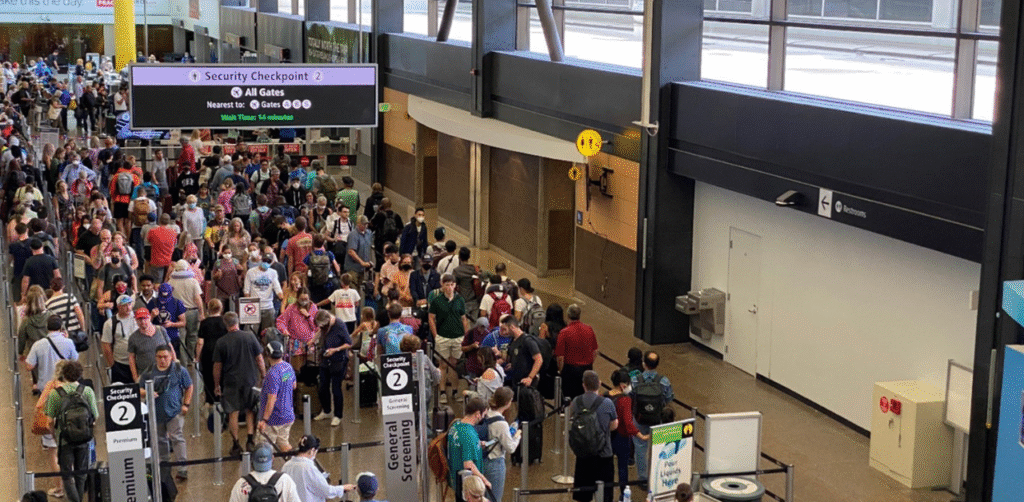
Understanding what travelers should expect at security checkpoints, including typical wait times, busy periods, and helpful tips, can make the airport experience far less stressful. With the right preparation, navigating security at SEA can be smoother and more predictable. So let us take a closer look at SEA Airport’s security wait times.
Understanding the Estimated Security Wait Times at SEA
Understanding the security wait times at Seattle International Airport (SEA) can help travelers plan their arrival and move through security without unnecessary stress. Security screening operations, staffing, and checkpoint hours at SEA are managed by the Transportation Security Administration (TSA), and wait times may vary throughout the day based on passenger volume.
It is essential to know that the live estimated security wait times aren’t available at the moment on SEA’s official website as well as the flySEA App. However, the authorities are doing their best to get things up and running.
When to Arrive at the SEA Airport
To avoid feeling rushed, it’s important to factor in enough time for parking, drop-offs, check-in, and security screening.
- Domestic Travelers: Arrive at least two hours before your scheduled departure.
- International Travelers: Arrive at least three hours before departure.
The security wait times at SEA depend on passenger traffic, which fluctuates throughout the day. More than one-third of daily passengers arrive before 9 a.m., making early mornings among the busiest periods at TSA checkpoints and on airport roadways. Additional peak periods typically occur between 2 p.m. and 5 p.m. and again from 9 p.m. – 11 p.m. Planning your arrival outside these busy windows can help reduce the time you spend waiting in security lines.
Seattle-Tacoma International Airport (SEA) Security Checkpoints
Here is a table outlining the security checkpoints at SEA:
| Checkpoint | Operating Hours | Available Screening & Services | Best For |
| Checkpoint 1 | 4:00 AM – 10:00 PM | General, TSA PreCheck, CLEAR (General & PreCheck) | A & S Gates |
| Checkpoint 2 | 4:00 AM – 4:00 PM | General, U.S. Service Member Lane, SEA Spot Saver | A & S Gates |
| Checkpoint 3 | 4:00 AM – 11:00 PM | General, TSA PreCheck, Touchless ID, Premium Lane | A & S Gates |
| Checkpoint 4 | Open 24 Hours | General, Premium Lane, Family Lane, SEA Spot Saver, SEA Visitor Pass | Central Terminal, B & C Gates |
| Checkpoint 5 | 4:00 AM – 10:00 PM | TSA PreCheck Only | C, D, & N Gates |
| Checkpoint 6 | 4:00 AM – 10:00 PM | General, TSA PreCheck, Touchless ID, CLEAR (General & PreCheck), Premium Lane | C, D, & N Gates |
Security Screening Types at SEA Airport
Seattle–Tacoma International Airport (SEA) has security screening measures that aim to ensure passenger safety while also making the travel experience smooth and efficient. It’s helpful for travellers to know about the various screening methods so they can prepare in advance and have a stress-free experience at airport security.
Choose Your Checkpoint at SEA
| TSA Checkpoint | Screening Types Available |
| Checkpoint 1 | General, TSA PreCheck, and CLEAR+ |
| Checkpoint 2 | General and SEA Spot Saver |
| Checkpoint 3 | General, TSA PreCheck, Premium, and TSA PreCheck Touchless ID |
| Checkpoint 4 | General, Premium, SEA Spot Saver, and SEA Visitor Pass |
| Checkpoint 5 | TSA PreCheck |
| Checkpoint 6 | General, Premium, TSA PreCheck, TSA PreCheck Touchless ID, and CLEAR+ |
Trusted Traveler Programs to Ensure a Lessened Security Wait Time at SEA Airport
Here are some of the domestic trusted traveler programs to mention to ensure you pass through security checks smoothly, sans any hassle or inconvenience.
- SEA Spot Saver – This complimentary service helps travelers choose and reserve a time slot to move through the security checkpoint at SEA efficiently. You can reserve in advance, a day before your travel, or on the date of your journey. However, booking in advance is advisable as spots fill fast.
- TSA PreCheck – This fee-based membership program allows members to use the faster security screening lanes. For this, you may refer to TSA’s official website.
- TSA PreCheck Touchless ID – This feature is offered to TSA PreCheck members who travel with participating airlines and allows them to verify their identity without presenting physical documents.
- Premium Security Access – This is a privilege granted to only a select few airlines. Passengers from those airlines will enjoy priority security screening.
- CLEAR+ – This membership-based service uses biometric verification to complete identity checks much faster.
Here are the international trusted traveler programs helping you navigate through security checks quickly.
- The Mobile Passport Control (MPC) App lets travelers who qualify to digitally submit their passport and customs info through a free mobile app, even before their arrival in the U.S.
- Global Entry is a paid membership program that offers faster U.S. Customs clearance and includes TSA PreCheck benefits.
- NEXUS is a membership program that aims to speed border crossings for pre-approved travelers between the United States and Canada.
Things to Know Before Entering the Security Checkpoint at SEA
A little preparation before reaching the TSA checkpoint can significantly speed up the screening process.
- Have your ID and boarding pass ready for the ticket document checker.
- Ensure reusable water bottles are empty before entering the checkpoint. Liquid disposal stations are available.
- Review TSA guidelines and airline policies in advance to confirm which items are allowed in carry-on luggage.
What to Expect in the Screening Lane To Ensure A Hassle-free Security Wait Time?
Once you reach the screening area, TSA agents will guide you through the process. Being prepared helps keep the line moving smoothly.
- If you’re traveling with specialty items such as car seats, strollers, wheelchairs, medication, or baby’s formula, you should contact a TSA agent to get the needed help.
- Empty your pockets and remove items such as keys, wallets, tissues, phones, and belts. These can be placed in your carry-on bag.
- Shoes and jackets must be removed and placed in a screening bin.
- Cellphone-sized gadgets are fine, but anything larger, such as laptops, tablets, e-readers, and handheld gaming consoles, must be removed from bags and placed in a separate tray for X-ray screening.
- The luggage that you have with you as carry-on should also be placed separately in a bin when you are going through the security check.
After Security Screening at SEA
After you have passed the security screening, take a moment to really look back at the bins and gather everything you brought along. Occasionally, travelers forget their belongings during hectic travel. If you think you left something at the TSA checkpoint, you can always ask airport personnel to help you find the appropriate lost and found services.
Understanding how long it might take at the checkpoint and getting ready for the screening can help travelers going through Seattle International Airport (SEA) move security faster and have a stress-free start to their trip.
Accessibility Services at SEA Security Checkpoints
For a worry-free experience, the airport suggests showing up at least 2 hours before the departure of a domestic flight and 3 hours before an international flight.
- Accessibility Support for Travelers: Passengers requiring special assistance can avail themselves of several support services during the security screening process. TSA offers guidance and resources to help passengers with medical conditions, mobility challenges, or other special circumstances to prepare for security procedures in advance.
- Contact TSA Cares for Assistance: One major assistance program is TSA Cares, a phone support system designed to help travelers who need additional assistance during airport security screenings. People with disabilities, health conditions, or those traveling under special circumstances are advised to contact this service 72 hours prior to their flight to obtain information about the process and prepare for the security check.
- Ask for a TSA Passenger Support Specialist: The Transportation Security Administration provides trained Passenger Support Specialists (PSS) who assist travelers at security checkpoints. These specialists guide passengers through screening and provide personalised support tailored to individual needs. Travelers can request assistance in advance online or ask a TSA officer at the checkpoint, and may provide optional medical documentation if required.
- Airline Accessibility Services: TSA support is not the only thing that airlines offer. In addition to security screening, airlines often provide accessibility services. These services include assistance with boarding and seating, as well as support during the flight. You should definitely reach out to your airline beforehand to learn about the available options and make arrangements if you need any special assistance during your journey.
- Accessibility Services When At the Airport: For wheelchair assistance, you must contact your respective airline in advance. SEA is a part of the Sunflower Lanyard Program, and participation is voluntary. This is apt for those with hidden disabilities like autism, dementia, anxiety issues, and so on. You will find them at the information desks near Security Checkpoints 4 and 5. One can even visit the airport’s sensory room for a calm, relaxing experience before their flight.
Conclusion:
Knowing the security wait times at Seattle–Tacoma International Airport (SEA) can help travelers plan their airport experience more effectively. Getting to the airport early, checking the latest information on security lines, and having your documents ready ahead of time will go a long way in minimizing your time at security screening.
Passengers are generally advised to get to the airport at least two hours before domestic flights and three hours before international departures. With updates on security procedures and wait times, passengers will be able to move through SEA Airport more efficiently and have a less stressful start to their trip.
FAQs
Estimated security wait times at SEA change depending on the time of day and the number of people there. Travelers will be better off showing up at least two hours ahead of domestic flights and three hours before international ones to make sure there is enough time to get through security.
On average, the time it takes to go through TSA security at SEA depends on the time of day and season. During the busiest hours, it might take longer, but it is usually quicker in the early mornings and late evenings.
Travelers who have a medical condition can contact TSA Cares or a Passenger Support Specialist to ensure they get help at the checkpoint and avoid any unnecessary delays.
Usually, you will have less waiting time in TSA PreCheck lanes. So, passengers can go through security faster by using the expedited screening procedures.
Yes, TSA wait times vary depending on passenger volumes, staffing levels, and the operational conditions on any given day. Monitoring live updates is a smart way to time your arrival.